Sobriety Checkpoints
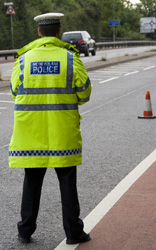 |
Many Sobriety checkpoints, or DUI roadblocks are established outside of neighborhoods or entrances to apartment complexes and consist of three to four police cruisers. Law enforcement uses orange traffic cones to define checkpoint areas. They then choose a pattern in which to stop cars. For example, they may pull over every fourth vehicle. If the roadblock is on a less-traveled street, they may pull over every car.
How Do Police Look For Drunk Drivers At Sobriety Checkpoints?
If the officers are using a portable breath test to determine the drivers’ blood alcohol content (BAC) levels, they can just move quickly from car to car. If such tests are not available, officers look for signs of driver impairment. These signs include:
- Contradictory answers to questions
- Smell of alcohol or illegal substances
- Slurred speech
- Open bottles of alcohol in the vehicle
- Bloodshot or red-rimmed eyes
- Admission of drug or alcohol use.
The officer will ask drivers exhibiting such signs to exit their vehicle and take a field sobriety test. These tests measure mental and physical skills and may consist of standing on one leg or walking in a straight line. If the driver does not pass the field sobriety tests, the officer will have them take an alcohol breath (or Breathalyzer) test.
Hire The Right Attorney For Your Case
It is illegal for an officer to force a driver to take a field sobriety or a breath alcohol test, but there is an “implied consent” law that requires drivers to submit to a BAC test if they are thought to be under the influence.
| States/Abbreviations | |||||
| AK | Alaska | LA | Louisiana | OH | Ohio |
| AL | Alabama | MA | Massachusetts | OK | Oklahoma |
| AR | Arkansas | MD | Maryland | OR | Oregon |
| AZ | Arizona | ME | Maine | PA | Pennsylvania |
| CA | California | MI | Michigan | RI | Rhode Island |
| CO | Colorado | MN | Minnesota | SC | South Carolina |
| CT | Connecticut | MO | Missouri | SD | South Dakota |
| DE | Delaware | MS | Mississippi | TN | Tennessee |
| FL | Florida | MT | Montana | TX | Texas |
| GA | Georgia | NC | North Carolina | UT | Utah |
| HI | Hawaii | ND | North Dakota | VT | Vermont |
| IA | Iowa | NE | Nebraska | VA | Virginia |
| ID | Idaho | NH | New Hampshire | WA | Washington State |
| IL | Illinois | NJ | New Jersey | WI | Wisconsin |
| IN | Indiana | NM | New Mexico | WV | West Virginia |
| KS | Kansas | NV | Nevada | WY | Wyoming |
| KY | Kentucky | NY | New York | DC | Washington DC |